AI Digital Twins Explained: 7 Powerful Ways They Could Change the Future
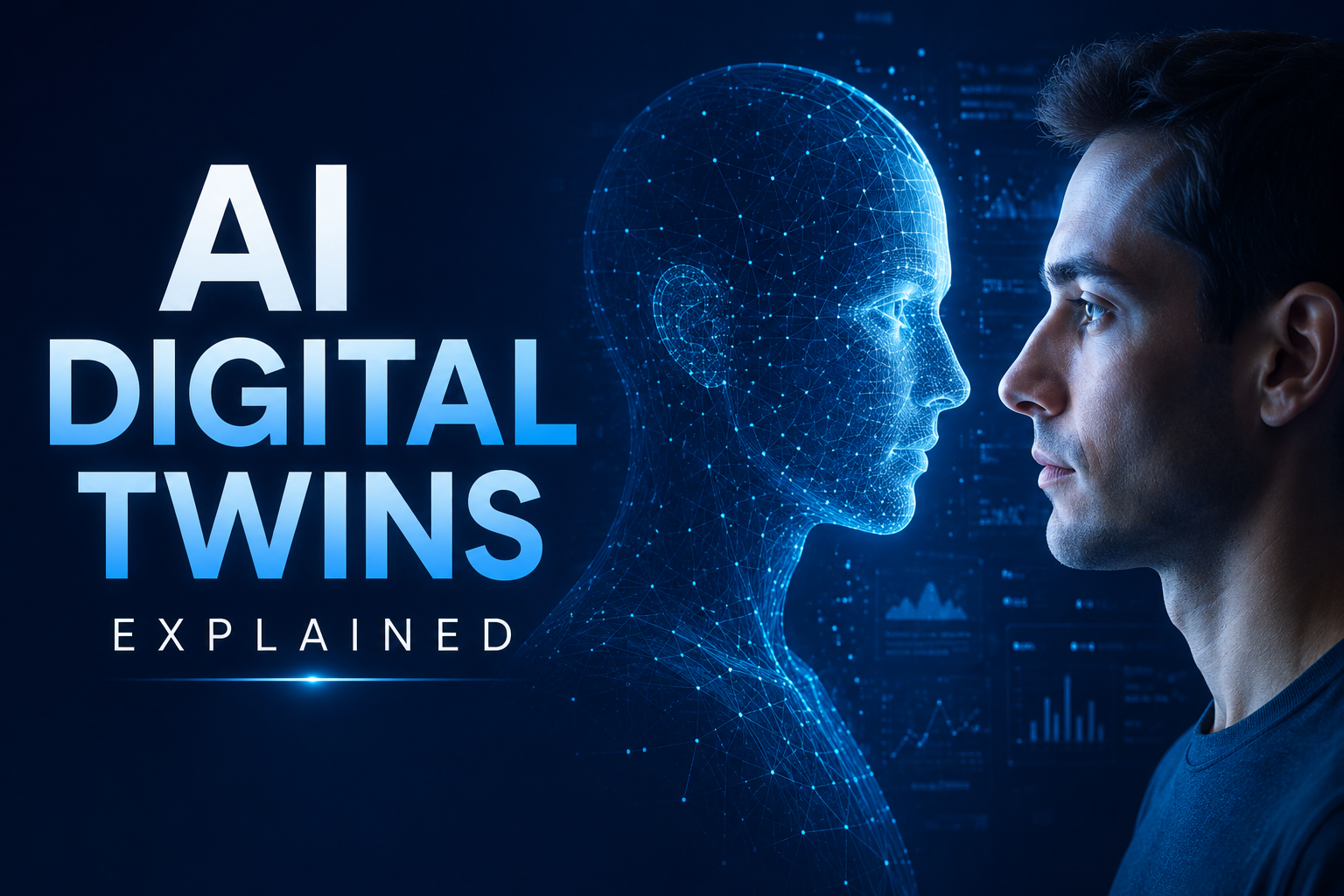
Artificial intelligence is evolving rapidly, but one of the most fascinating developments isn’t another chatbot , it’s the rise of AI Digital Twins.
Imagine having an AI version of yourself that understands your habits, preferences, communication style, and even helps make decisions on your behalf.
It might sound like science fiction, but companies are already exploring this technology for healthcare, business, education, and customer experiences. The idea isn’t to replace people , it’s to create intelligent digital replicas that can learn, predict, and assist.
So, what exactly are AI Digital Twins, and why are they becoming one of the most exciting AI trends?
What Are AI Digital Twins?
An AI Digital Twin is an intelligent digital representation of a person, object, machine, or process.
Unlike a simple profile or database, a digital twin continuously learns from new information and can simulate behavior, predict outcomes, and help make better decisions.
Think of it as a virtual version that evolves alongside its real-world counterpart.
Originally, digital twins were used in manufacturing to monitor machines and predict maintenance needs. Today, AI is expanding the concept to include people, organizations, and even entire cities.
How Do AI Digital Twins Work?
Although every system is different, most AI Digital Twins follow a similar process:
- Collect data from multiple sources.
- Learn patterns using AI models.
- Continuously update as new information becomes available.
- Simulate possible scenarios.
- Recommend actions or automate decisions.
The more accurate and current the data, the more useful the digital twin becomes.
7 Real-World Applications of AI Digital Twins
1. Personalized Healthcare
Future digital twins could combine medical records, wearable devices, and lifestyle information to help doctors predict health risks earlier and recommend personalized treatments.
2. Smarter Manufacturing
Factories already use digital twins to monitor equipment, predict failures, and improve efficiency before problems occur. AI makes these simulations more adaptive and useful.
3. Business Decision-Making
Companies can create digital twins of business operations to test strategies before making expensive real-world decisions.
Instead of guessing, organizations can simulate different outcomes first.
4. Customer Experience
Some companies are exploring Digital Twins of Customers, creating AI models that help predict customer preferences and improve products or services.
5. Smart Cities
Entire cities are beginning to use digital twins to improve transportation, energy usage, emergency planning, and urban development.
Dubai is one of the best-known examples of this approach.
6. Personal Productivity
Imagine an AI that understands your calendar, work habits, emails, and priorities.
Instead of simply answering questions, your digital twin could organize your schedule, prepare meeting summaries, and automate repetitive tasks.
7. Executive AI Twins
Some business leaders are already experimenting with AI versions of themselves trained on speeches, emails, and interviews to handle presentations and routine communications more efficiently.
Benefits of AI Digital Twins
AI Digital Twins offer several advantages:
- Better decision-making
- Personalized recommendations
- Faster simulations
- Increased productivity
- Predictive insights
- Reduced operational costs
As AI models become more capable, these benefits are expected to expand across many industries.
Challenges and Risks
Despite their potential, AI Digital Twins also raise important questions.
Some of the biggest challenges include:
- Data privacy
- Cybersecurity
- Accuracy
- Ethical use
- User trust
A digital twin is only as reliable as the data and AI systems behind it, making responsible design essential.
Are AI Digital Twins the Future?
Many experts believe AI Digital Twins will become increasingly common over the next decade.
Rather than replacing humans, they are likely to become intelligent assistants that help individuals and organizations make better decisions using real-time data and AI.
We’re still in the early stages, but the technology is evolving quickly.
Final Thoughts
AI Digital Twins represent one of the most exciting directions in artificial intelligence.
From personalized healthcare and smarter cities to business simulations and digital personal assistants, the technology has the potential to transform how we work, live, and make decisions.
While challenges such as privacy and ethics remain, AI Digital Twins are moving from research labs into real-world applications—and they may soon become a part of everyday life.