What Is Model Context Protocol (MCP)? A Complete Guide for 2026
Artificial intelligence is becoming more powerful every day, but one major challenge has remained the same: how can AI securely communicate with the tools and data people use every day? Whether it’s accessing company databases, searching documents, managing cloud storage, or interacting with business applications, AI systems have traditionally required custom integrations for each service.
This is where Model Context Protocol (MCP) comes in.
Introduced as an open standard for connecting AI models with external tools and data sources, Model Context Protocol (MCP) is quickly becoming one of the most important technologies shaping the future of AI applications. Instead of building separate integrations for every database, API, or software platform, developers can use a single standardized protocol that allows AI assistants to communicate with multiple systems efficiently and securely.
As more businesses adopt AI-powered workflows and autonomous agents, the need for a universal communication standard has never been greater. MCP addresses this challenge by making it easier for AI models to discover tools, access relevant information, and perform real-world tasks without requiring complex, one-off integrations.
In this guide, you’ll learn what Model Context Protocol (MCP) is, why it was created, how it works, its key components, real-world applications, benefits, limitations, and why many experts believe it will become a foundational technology for the next generation of AI systems.
What Is Model Context Protocol (MCP)?
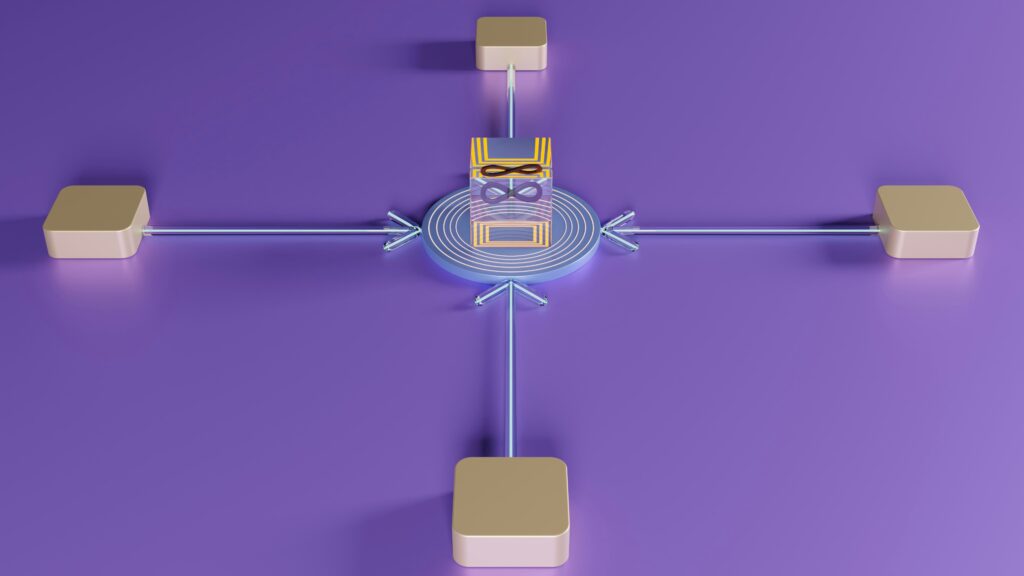
Model Context Protocol (MCP) is an open standard that enables artificial intelligence models to securely connect with external tools, applications, databases, and data sources through a single, standardized interface. Instead of building custom integrations for every AI application, MCP provides a universal way for AI systems to discover, access, and interact with the resources they need.
Think of MCP as a universal connector for AI.
Just as USB-C allows different devices to communicate using one common standard, Model Context Protocol allows AI assistants to communicate with many different software platforms without requiring developers to build separate integrations for each one.
For example, imagine you ask an AI assistant:
“Analyze last month’s sales report, summarize the key findings, and email the report to my manager.”
Without MCP, the AI would need separate integrations for your cloud storage, spreadsheet software, email service, and any other application involved. Each integration would have to be built, maintained, and updated individually.
With Model Context Protocol, the AI can access these connected tools through a standardized protocol, making development much simpler while providing a more consistent and reliable experience.
This standardized approach reduces complexity for developers while allowing AI models to become significantly more useful in real-world environments. Instead of simply generating text, AI assistants can retrieve information, interact with business systems, execute workflows, and help users complete meaningful tasks across multiple applications.
As AI agents become increasingly autonomous, Model Context Protocol is expected to play a critical role in enabling secure and scalable communication between AI systems and the digital tools people use every day.
Why Was Model Context Protocol Created?
Before MCP, developers often faced the same problem whenever they wanted an AI model to interact with external services: every application required its own custom integration.
For example, connecting an AI assistant to Google Drive required one implementation, connecting it to Slack required another, and integrating with GitHub, databases, or CRM platforms meant writing even more custom code. As the number of tools increased, these integrations became difficult to maintain and expensive to scale.
Model Context Protocol was created to solve this challenge by introducing a shared communication standard. Instead of learning how to connect with every individual service, AI applications can use MCP to communicate with any compatible tool in a consistent and predictable way.
This approach saves development time, simplifies maintenance, improves compatibility, and makes it much easier to build powerful AI applications that work across multiple platforms.
How Does Model Context Protocol (MCP) Work?
At a high level, Model Context Protocol (MCP) acts as a bridge between AI models and external tools. Instead of requiring a separate integration for every application, MCP provides a standardized method for exchanging information, allowing AI systems to communicate with different services using the same protocol.
When a user submits a request, the AI first analyzes the objective and determines whether it needs information or actions from external systems. If additional resources are required, the AI uses MCP to discover available tools, retrieve relevant data, or perform specific actions before generating its final response.
This process happens seamlessly in the background, giving users a smooth experience while reducing the complexity developers face when building AI-powered applications.
The Core Components of MCP
Although implementations may vary, most Model Context Protocol systems rely on three core components.
The AI Client
The AI client is the application that receives the user’s request. This could be an AI assistant, chatbot, coding assistant, or any application powered by a large language model.
Its role is to understand the user’s goal and determine which external resources are needed to complete the task.
The MCP Server
The MCP server acts as a gateway between the AI and external services. It exposes available tools, databases, APIs, and documents in a standardized format that AI models can understand.
Instead of building separate integrations for every AI application, developers only need to expose their services through an MCP-compatible server.
This greatly simplifies maintenance and improves interoperability between different AI platforms.
External Tools and Data Sources
Behind the MCP server are the actual resources the AI can use.
These may include:
- Cloud storage services
- SQL and NoSQL databases
- Business applications
- Email platforms
- Project management tools
- Git repositories
- Company documentation
- Internal knowledge bases
- Third-party APIs
Because these resources are connected through MCP, the AI can access them without requiring a completely different integration for each one.
A Simple Example
Imagine you’re working with an AI assistant and ask:
“Summarize yesterday’s customer feedback, identify the three biggest complaints, create a report, and email it to my support manager.”
Instead of simply generating text, the AI could:
- Connect to your customer feedback database.
- Retrieve yesterday’s comments.
- Analyze recurring issues.
- Generate a professional report.
- Save the report to cloud storage.
- Send it via your email platform.
Without Model Context Protocol, every one of these actions would require separate integrations. With MCP, the AI communicates through a standardized interface, making the entire workflow faster, more reliable, and easier to maintain.
Model Context Protocol (MCP) vs Traditional APIs
At first glance, Model Context Protocol (MCP) may seem similar to a traditional API. Both allow software applications to communicate with external services and exchange information. However, they are designed for different purposes.
A traditional API is built so one application can communicate directly with another. Developers typically create separate integrations for every service they want to connect. For example, if an AI assistant needs access to Google Drive, Slack, GitHub, and a CRM platform, each service requires its own API integration, authentication method, and maintenance.
As the number of connected tools grows, managing these individual integrations becomes increasingly complex. Every update to an external service may require developers to modify their code, increasing both maintenance costs and development time.
Model Context Protocol takes a different approach.
Instead of requiring AI applications to understand every external API individually, MCP provides a standardized communication layer between AI models and external tools. Once a service exposes its capabilities through an MCP server, compatible AI assistants can discover and use those capabilities without needing a custom integration for every application.
This standardization makes AI systems more flexible, easier to maintain, and significantly more scalable.
Why MCP Is Better for AI Applications
Artificial intelligence systems are fundamentally different from traditional software.
Instead of following fixed workflows, AI models need to explore available resources, determine which tools are appropriate for a task, retrieve information, and decide what action to take next.
Model Context Protocol was specifically designed to support this type of intelligent interaction.
Rather than hardcoding every possible integration, developers expose tools through MCP, allowing AI assistants to dynamically discover what resources are available and choose the most appropriate one based on the user’s request.
This creates a much more adaptive and intelligent system compared to traditional API integrations.
Real-World Example
Imagine a company that uses:
- Google Drive for documents
- Slack for communication
- GitHub for software development
- Jira for project management
- Salesforce for customer relationships
Without MCP, an AI assistant would require separate integrations for each platform, each with its own authentication process, documentation, and maintenance requirements.
With Model Context Protocol, these tools can be exposed through a common standard, allowing the AI to interact with all of them using a consistent approach. As new tools are added, developers simply connect them through MCP rather than rebuilding the AI’s entire integration layer.
This not only saves development time but also makes AI assistants much easier to expand as business needs evolve.
Why Developers Are Excited About MCP
One of the biggest reasons developers are adopting Model Context Protocol is its ability to simplify AI application development.
Instead of spending weeks building and maintaining dozens of custom integrations, development teams can focus on creating better AI experiences while relying on MCP as a standardized communication layer.
As more software companies adopt the protocol, interoperability between AI systems and business applications is expected to improve dramatically.
This is why many developers see MCP as an important building block for the next generation of AI-powered software.
Benefits of Model Context Protocol (MCP)
As AI applications become more advanced, the need for a standardized communication framework becomes increasingly important. Model Context Protocol (MCP) offers several advantages that benefit developers, businesses, and end users alike.
Simplified Development
Instead of building separate integrations for every application, developers can use MCP to connect AI systems with multiple tools through a single standardized protocol. This significantly reduces development time and makes AI projects easier to maintain.
Better Scalability
As organizations adopt more software platforms, managing individual integrations quickly becomes complex. MCP provides a flexible architecture that allows new tools and services to be added without redesigning the entire AI system.
Improved Security
Because MCP defines a structured way for AI models to interact with external resources, organizations can implement consistent authentication, permissions, and access controls. This helps reduce security risks while ensuring AI systems only access authorized information.
Greater Interoperability
One of MCP’s greatest strengths is interoperability. AI assistants can communicate with databases, cloud storage, business applications, APIs, and other services using the same protocol, making it much easier to build powerful AI-powered workflows.
The Future of Model Context Protocol
Although Model Context Protocol is still in its early stages of adoption, many experts believe it will become one of the foundational standards for AI applications over the coming years.
As AI agents become more autonomous, they will need reliable ways to interact with external tools, retrieve information, and perform real-world actions. MCP provides the standardized communication layer needed to make this possible.
Future AI assistants may use MCP to seamlessly manage calendars, update CRM systems, analyze business data, control cloud infrastructure, write software, and collaborate across dozens of different applications without requiring custom integrations for every platform.
With major AI companies embracing open standards and interoperability, Model Context Protocol has the potential to become as important for AI as HTTP became for the modern web.
Frequently Asked Questions
What is Model Context Protocol (MCP)?
Model Context Protocol (MCP) is an open standard that allows AI models to securely communicate with external tools, applications, databases, and APIs through a standardized interface.
Why is MCP important?
MCP simplifies AI development by reducing the need for custom integrations. It makes AI systems more scalable, secure, and capable of interacting with multiple software platforms.
Is Model Context Protocol only for developers?
No. While developers build MCP integrations, businesses also benefit because it allows AI assistants to automate workflows, access company data, and perform tasks across different applications more efficiently.
Does MCP replace APIs?
Not entirely. APIs remain the foundation for communication between software services. Model Context Protocol builds on top of existing technologies by providing a standardized way for AI systems to discover and use those services.
Which companies are adopting MCP?
Many AI companies, software vendors, and developer platforms are actively exploring or implementing Model Context Protocol to improve AI interoperability. As the ecosystem continues to grow, adoption is expected to increase across both enterprise and open-source communities.
Final Thoughts
Artificial intelligence is moving beyond simple chatbots and becoming an active participant in everyday workflows. As AI assistants gain the ability to reason, plan, and interact with external systems, the need for a common communication standard becomes increasingly important.
Model Context Protocol (MCP) addresses this challenge by providing a universal way for AI models to connect with tools, applications, databases, and services. Instead of relying on countless custom integrations, developers can build more scalable, secure, and flexible AI solutions using a single standardized approach.
Whether you’re a developer creating AI-powered applications, a business exploring intelligent automation, or simply someone interested in the future of artificial intelligence, understanding Model Context Protocol is becoming an increasingly valuable skill.
As AI technology continues to evolve, MCP is well positioned to become one of the key building blocks that enables the next generation of intelligent assistants, autonomous AI agents, and enterprise AI solutions.
The official Model Context Protocol documentation provides detailed technical information for developers who want to build MCP-compatible applications.
Link: